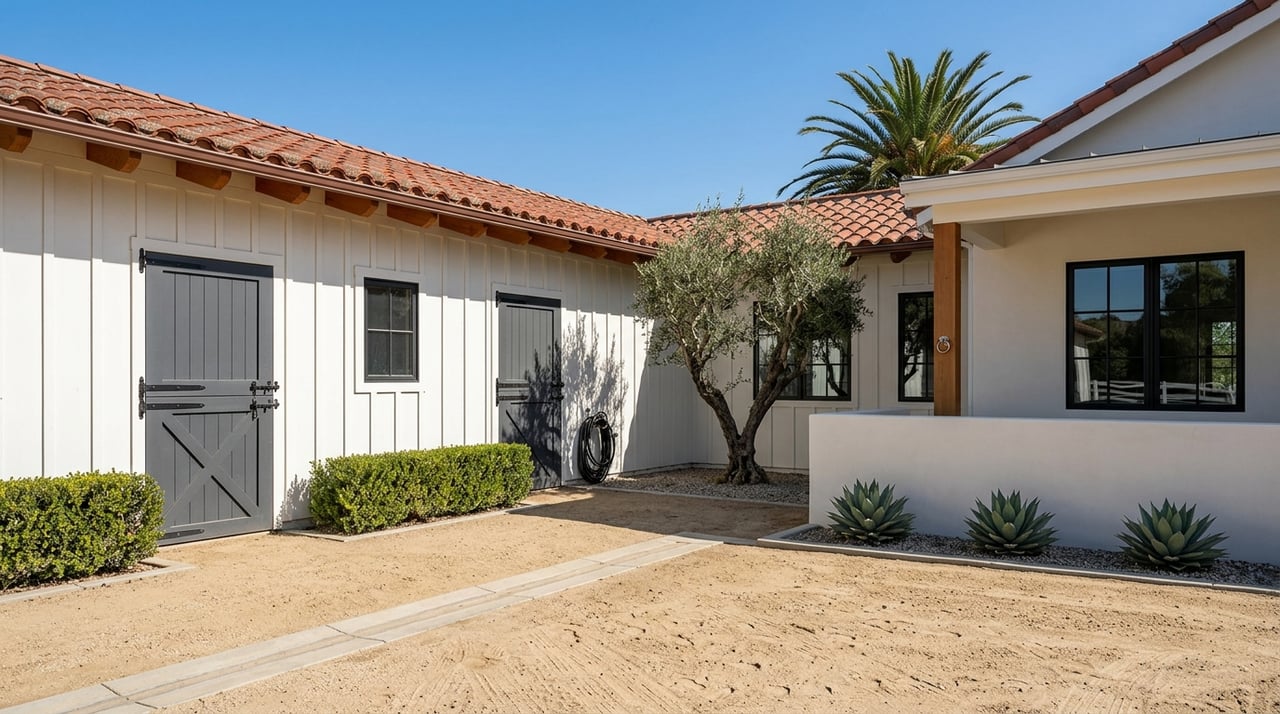
Rolling Hills Equestrian Living: What Buyers Should Know
June 4, 2026
June 4, 2026
If you are picturing Rolling Hills as just another luxury enclave, you may miss what makes it so distinct. This is a small, private South Bay community where horses, acreage, and quiet roads are built into daily life, not treated as an afterthought. If you are considering a move here, understanding how the land, trail system, and property rules work can help you decide whether the lifestyle truly fits your goals. Let’s dive in.
Rolling Hills is remarkably small by Los Angeles County standards. The U.S. Census Bureau profile lists 1,739 residents across 3.0 square miles, which helps explain why the community feels intimate and low density.
The setting is also unusually private. City planning materials describe gated, limited-access roads, and the city’s financial reporting states there are no retail or commercial businesses within city limits. In practical terms, that means life here tends to feel quieter, more residential, and more removed from the pace of a typical suburban neighborhood.
For many buyers, that is exactly the appeal. Rolling Hills offers a rural-feeling address within the coastal Los Angeles market, with a lifestyle centered more on land, privacy, and equestrian use than on errands, storefronts, or walkable commercial corridors.
In Rolling Hills, equestrian living is not a niche use layered onto a standard residential neighborhood. The city’s Residential Agriculture-Suburban zoning is specifically designed to accommodate and maintain equestrian uses and facilities while preserving rural character.
That framework matters because it affects how properties look, function, and feel. The zoning includes RA-S-1 and RA-S-2 districts with minimum net lot areas of 43,560 square feet and 87,120 square feet, along with generous setbacks and height limits for homes, barns, and stables.
For you as a buyer, that means the property itself is part of the equestrian experience. You are not only evaluating square footage or finishes inside the home. You are also looking at whether the parcel can support circulation, horse facilities, storage, and the open spacing that defines the area.
Rolling Hills code treats horsekeeping as a normal part of property planning. For subdivision review, tentative maps must show a 12,000-square-foot graded building pad, plus at least 450 square feet of stable area and 550 square feet of corral area.
The code also anticipates features such as stables, corrals, turnouts, paddocks, and horseback riding rings. That tells you something important about the market here: outdoor function can be just as important as interior design.
If you are comparing homes, it helps to look beyond the main residence. A well-sited parcel may offer stronger long-term usability than a more visually striking home on a lot with tighter constraints.
Setbacks are a major part of how Rolling Hills preserves its open, rural feel. The zoning calls for 50-foot front and rear setbacks, side setbacks of 20 to 35 feet, and height limits of 21 feet for typical homes and 23 feet for stables and barns.
Those requirements shape how improvements fit on the lot. If you are planning updates, considering horse facilities, or simply trying to understand how the property works day to day, these placement rules can have a real impact.
One of the most distinctive parts of Rolling Hills is that trail access is embedded in the physical design of the community. The subdivision code requires tentative maps to show roads and easements for drainage, utilities, and bridle trails.
The city’s improvements code goes further by requiring subdividers to dedicate boundary-line easements for bridle trail and utility purposes along the sidelines and rear lines of each lot. That means the trail network is not a decorative extra. It is part of how the neighborhood was planned.
For equestrian-minded buyers, that is a meaningful difference. In many places, riding access depends on scattered private arrangements or isolated amenities. In Rolling Hills, the trail system is part of the subdivision pattern itself.
The city’s capital assets include open-space parcels such as Poppy Trail land and Storm Hill Park. Together with the bridle trail easements, these open areas reinforce the community’s identity as a place where land and movement matter.
This planning approach also shapes the visual character of the area. You may notice a stronger sense of separation between properties, more open views, and a setting that feels intentionally less urban than many luxury neighborhoods nearby.
Rolling Hills is built around privacy and controlled access. The zoning allows a gate house as a primary use, which aligns with the city’s limited-access character.
That private environment is reinforced in other ways too. Many accessory structures must be screened from public rights-of-way, easements, and adjacent properties with landscaping, and even satellite antennae must be screened from surrounding properties and public rights-of-way.
The result is a community where visual order and discretion are part of the lifestyle. If you value a setting that feels tucked away and carefully maintained, Rolling Hills stands apart.
Day-to-day logistics can be more involved here than in a standard suburban neighborhood. Developed lots are generally limited to one driveway, and horse-related structures and uses need to fit around setbacks, easements, and screening requirements.
That is why site planning matters so much. When evaluating a property, it is smart to think about how you will move through the lot, where support structures sit, and how the layout supports both household living and any equestrian use.
The subdivision code states that no provision shall be made for street lighting. That contributes to a darker, less urban atmosphere that many residents likely value for its quiet and rural feel.
For some buyers, that setting feels peaceful and distinctive. For others, it may feel less convenient than a more conventional neighborhood grid. Understanding that difference early can help you decide whether the community aligns with your day-to-day preferences.
Rolling Hills offers a very specific kind of luxury. It is less about quick access to stores and more about privacy, land, and a horse-oriented environment within the South Bay.
That means your home search should focus on more than architecture and finishes. You will also want to evaluate lot size, stable or corral potential, screening, setbacks, driveway access, and how the parcel connects to the broader bridle trail framework.
City planning materials also identify the area as a Tier 2 elevated fire-threat region with a May-to-October fire season. For buyers considering acreage properties or barns, that context makes lot layout, defensible space, and overall property planning especially important.
Rolling Hills tends to appeal to buyers who want space, privacy, and a rural-feeling setting within the greater coastal Los Angeles market. If you are drawn to equestrian living, larger parcels, and a more secluded atmosphere, the community offers a rare combination.
It may be less compelling if your ideal neighborhood revolves around walkable errands, dense street grids, or nearby commercial activity. With no retail or commercial businesses within city limits, the lifestyle here is intentionally residential and low access.
That is why local guidance matters. The right property in Rolling Hills is not just the one with the right home. It is the one where the lot, access, trail relationship, and long-term usability all line up with how you want to live.
If you are exploring Rolling Hills or comparing it with other South Bay luxury markets, working with a team that understands both lifestyle fit and property positioning can make the process far more strategic. Connect with The Zebrowski Group for tailored guidance on South Bay luxury homes, private opportunities, and property value insights.
Stay up to date on the latest real estate trends.
Ready to get started? Reach out to us today to schedule a consultation or inquire about our services. We're here to answer your questions, address your concerns, and provide you with the support you need to make informed decisions in today's real estate market.