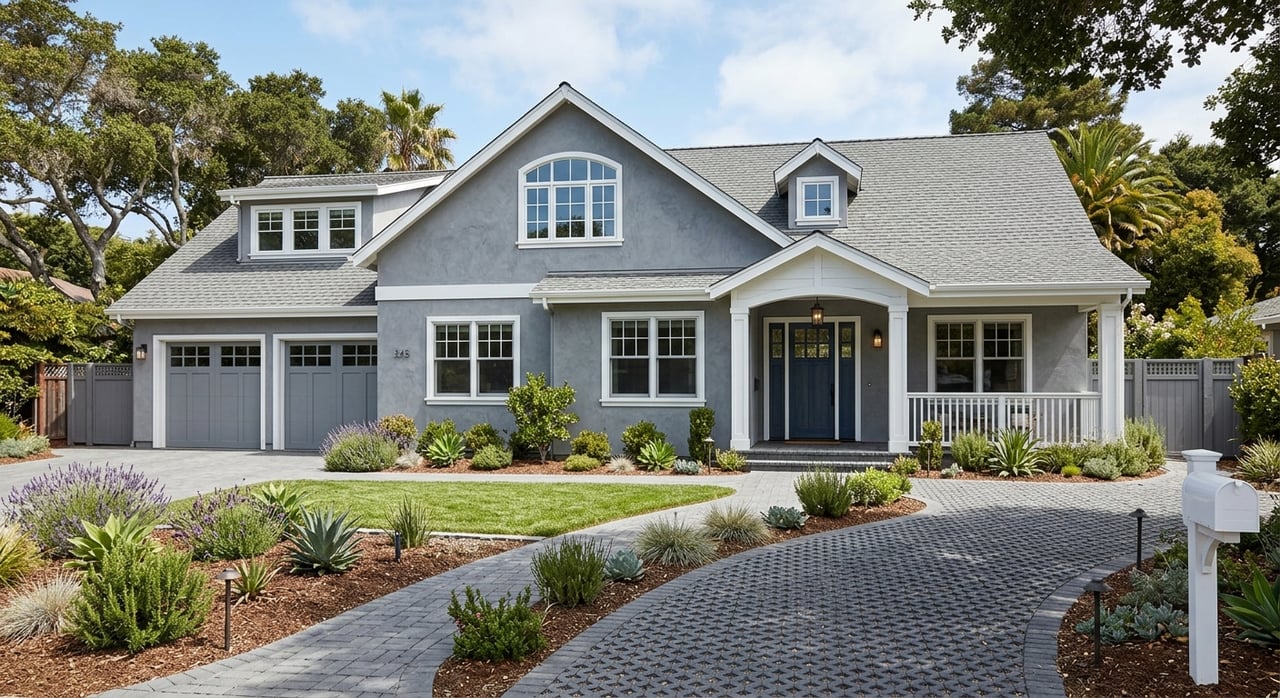
A Smart Plan for Move-Up Buyers in Torrance
July 9, 2026
July 9, 2026
If you already own in Torrance, moving up can feel both exciting and complicated. You may have strong equity, but you are also looking at a market where home prices remain high, financing costs are still elevated, and the best listings can move fast. The good news is that with the right plan, you can line up your sale, your purchase, and your budget with much more confidence. Let’s dive in.
Torrance remains a premium housing market by any measure. Recent data sources place the city around roughly $1.035 million to $1.25 million depending on whether you are looking at listing prices, sale prices, or different reporting methods.
That range matters because move-up buyers are often shopping in the upper end of Torrance’s micro-markets, where pricing can climb much higher. At the same time, mortgage costs remain meaningful, with Freddie Mac reporting a national 30-year fixed rate of 6.43% on July 2, 2026.
In plain terms, your next move is not just about finding more space. It is about making sure your equity, monthly payment, and timing all work together.
Before you tour homes, get clear on what your current home can realistically contribute to the next purchase. That means looking beyond your estimated sale price and focusing on net proceeds.
Your net proceeds should account for:
This step is especially important in Torrance because pricing can shift sharply from one area to another. A move from an older or smaller home into a larger property in South Torrance, West Torrance, or Riviera can change your budget by hundreds of thousands of dollars.
For most homeowners, selling first is the cleaner path. Consumer guidance on move-up transactions notes that people commonly sell their current home before buying the next one, and that the two closings are often coordinated to happen at nearly the same time.
That approach can reduce the risk of carrying two mortgages longer than planned. It can also give you a firmer down payment number before you commit to the next purchase.
Still, there is no one-size-fits-all answer. In Torrance, your best path usually falls into one of three categories.
This is often the most conservative route. You sell your current home, know your proceeds, and shop with a much clearer budget.
It works well if you want to minimize financial stress and avoid overextending. The tradeoff is that you may need temporary housing or a carefully timed closing if you do not secure your next home right away.
This route can make sense if you have substantial savings, strong income, or enough flexibility to carry overlap for a period of time. It can also reduce the pressure of having to find the next home quickly.
The risk is simple: in a high-cost market, even a short overlap can be expensive. You need to be comfortable with the possibility of two housing payments, plus closing costs and moving costs landing close together.
This is often the sweet spot for move-up owners in Torrance. You prepare your current home for market, secure financing, and work toward a sale and purchase that close close together.
When it works, it limits disruption and keeps your equity moving efficiently from one property to the next. It also takes careful planning around escrow, inspections, title work, and timelines.
The short answer is: it depends on the property and the neighborhood. Citywide data shows a market that is still competitive, but not perfectly uniform.
Recent reports show median or average days on market ranging from about 26 to 40 days depending on the source, while Zillow reported 13 days to pending in late spring 2026. Redfin also described Torrance as very competitive, with homes selling at roughly 1% above list on average.
That tells you two things at once. Well-priced homes can move quickly, and homes that sit may offer more room for negotiation.
One of the biggest mistakes move-up buyers make is treating Torrance like a single market. The data suggests the opposite.
For example, neighborhood-level figures show differences such as:
That is a big spread. If you are moving up, your timing and offer strategy should be shaped by the specific neighborhood and price point you are targeting, not just the citywide average.
The best Torrance neighborhood for a move-up is the one that matches your long-term priorities. The city notes that neighborhoods across Torrance share an emphasis on parks, trees, green space, safety, and security, while still offering distinct identities.
That means your search should focus less on finding a universally “best” area and more on finding the right fit for your budget, commute, home style, lot size, and daily routine.
West Torrance is often a convenience-driven move-up choice. The city profile connects it to Del Amo Fashion Center, the financial center, and the Hawthorne Boulevard commercial corridor.
Recent neighborhood pricing places West Torrance around a $1.56 million median listing price. For buyers who want detached homes with strong access to shopping and daily errands, it is often a practical step-up target.
South Torrance includes a large concentration of single-family neighborhoods, with access to parks, open space, pedestrian-friendly streets, the airport, and Torrance Memorial Hospital. It is one of the city’s key move-up zones for buyers seeking a long-term home.
Submarket pricing varies meaningfully. Recent figures show Seaside around $1.7 million, Southwood Riviera around $1.62 million, Walteria around $1.30 million, and Southwood around $1.40 million.
Old Torrance offers a different kind of appeal. The city describes it as having historic structures, narrower streets, smaller lots, and a pedestrian-friendly feel.
Its median listing price, around $812,000 in current neighborhood data, is lower than many South and West Torrance submarkets. For some move-up buyers, that can create an opening to prioritize character and location while accepting older housing stock and a more preservation-sensitive context.
North Torrance and Northwest Torrance can appeal to buyers who want a mix of housing options and easier I-405 access. The city notes a defined street grid and a mix of single-family homes, apartments, and condos in North Torrance.
Recent pricing places North Torrance and Northwest Torrance around $995,000. For households moving up from a condo, townhome, or smaller starter house, these areas may offer a more approachable next step than some higher-priced southern pockets.
For buyers looking at the upper end of the Torrance market, the Hillside and Riviera areas stand apart. The city describes Hillside as almost entirely single-family with larger lots and views, while Riviera is known for ocean and city views and distinctive architecture.
That premium shows up in the numbers. Recent data places Riviera near $2.2 million, making it one of the city’s most aspirational move-up destinations.
Many move-up buyers are not just looking for a bigger house. They are looking for a home they can stay in for years.
Torrance supports that kind of planning. The city reports 33 parks, one public beach, 1.5 miles of lifeguard-patrolled beach, 550 miles of sidewalks, 90,000 street trees, and 46 community facilities. Torrance Unified School District also serves 30 schools.
Those features help explain why many buyers see a Torrance purchase as a long-term lifestyle decision. When you move up here, you are often buying into a broader day-to-day experience, not just extra square footage.
If you qualify, Proposition 19 can be one of the most important tax planning tools in a California move-up transaction. According to the California Board of Equalization, eligible homeowners age 55 or older, severely and permanently disabled homeowners, and certain disaster victims may transfer a base-year value to a replacement principal residence anywhere in California within two years of the sale.
For age 55+ and disabled claims, up to three transfers are allowed. If the replacement home is equal or lesser in value than the original, there is no adjustment to the transferred base-year value. If the replacement is more expensive, the difference is added to the transferred value.
For the right homeowner, that can meaningfully change the affordability of moving up. If you think you may qualify, this should be part of your planning from the beginning, not an afterthought.
As your budget rises, due diligence matters even more. In Torrance, the city’s GIS and mapping tools can help you review zoning, land use, subdivision activity, and aerial imagery.
For move-up buyers, that can support smarter decisions about lot shape, boundary questions, and remodel potential. It is a practical step when you are considering a higher-budget purchase and want to understand not just the home, but the parcel and surrounding context.
If you are moving up in Torrance, the winning strategy is usually not to rush. It is to sequence the move carefully, understand your true buying power, and shop neighborhood by neighborhood.
In a market where some homes move fast and others linger, preparation creates leverage. When you know your equity, your timing options, and your target micro-market, you can make a stronger move with less stress and more clarity.
If you are thinking about moving up in Torrance and want a tailored plan for your home sale, next purchase, and neighborhood options, connect with The Zebrowski Group.
Stay up to date on the latest real estate trends.
Ready to get started? Reach out to us today to schedule a consultation or inquire about our services. We're here to answer your questions, address your concerns, and provide you with the support you need to make informed decisions in today's real estate market.